Talking to Your Child About Their First Therapy Session
Written By: Marissa Lloyd
The day before your child's first therapy appointment, you may find yourself rehearsing what to say. How do you explain therapy in a way that does not scare them, label them, or make it sound like punishment? What if they ask questions you do not know how to answer? What if they refuse to go?
August is often when families start therapy. The back-to-school transition surfaces emotions that summer kept tucked away, and grief from losses earlier in the year can resurface as routines change. We see it every year, and we want to help. How you talk with your child about that first session matters, sometimes more than the session itself. A short, honest conversation at home can transform what feels like a stressful unknown into something your child walks into with curiosity instead of fear.
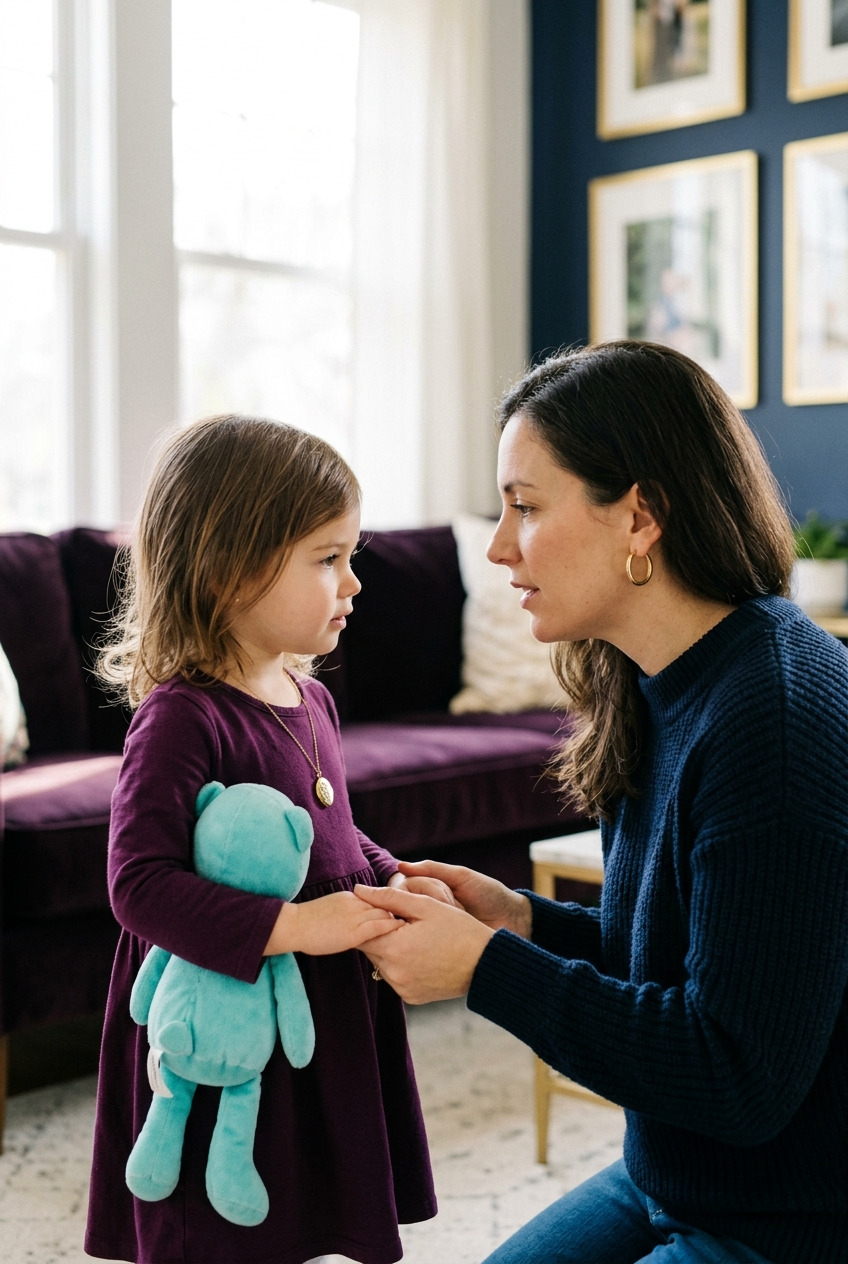
Why How You Frame It Matters
Children take their cues from the adults around them. If you are anxious about therapy, even if you do not say a word, they will sense it. If you describe therapy in vague or scary terms, they will fill in the gaps with imagination, which is rarely reassuring. If you frame it as a consequence of their behavior, they will arrive feeling defensive and ashamed.
On the other hand, when therapy is presented as a normal, helpful, even positive part of life, children adjust quickly. The framing is not about pretending everything is fine. It is about giving your child accurate information in language that fits their age and helps them feel safe.
Therapy, framed well, is just a conversation with a person whose job is to help kids understand their feelings. That is a much easier thing to walk into than whatever a child might be imagining on their own.
Common Questions Children Ask
Children often have specific worries about therapy that adults do not anticipate. Hearing the questions ahead of time helps you respond with confidence rather than scrambling for words. Here are some of the most common:
Why do I have to go. Am I in trouble.
Is something wrong with me.
Will the therapist tell you everything I say.
Are you going too. Do you go to therapy.
Will there be needles or tests.
What if I do not want to talk.
How long do I have to go for.
Will I have to talk about (the thing they do not want to talk about).
Is the therapist going to be like a doctor or like a teacher.
Can I bring a stuffed animal.
You do not need to answer all of these preemptively. Just being ready for them helps. Many children will not ask these out loud, but they are wondering. A short, warm preview that addresses a few of these unspoken questions can settle a lot of nerves.
How to Prepare Your Child: A Gentle Approach
Preparation does not need to be a long, serious conversation. In fact, the lighter and more matter of fact you can be, the better. Here are five steps that tend to work well across ages.
1. Bring It Up Casually, Not Solemnly
Choose a low pressure moment to mention the appointment. A car ride, dinner, or while doing something together is often better than sitting down for a "we need to talk" conversation. The tone you use sends a message before the words do. If you treat it like ordinary news, your child is more likely to receive it that way.
You might say something like, "I want to tell you about something we are going to do next week. We are going to meet a person whose job is to help kids talk about feelings and figure things out. It is called therapy, and a lot of kids do it."
2. Give Honest, Age-Appropriate Reasons
Children deserve to know why they are going. Vague answers like "because you need it" or "because I said so" tend to backfire. Specific, validating reasons help your child feel seen rather than singled out. For younger children, simple is best. "You have been having a lot of big feelings lately, and we want to help you understand them." For older children and teens, you can be more specific. "I noticed school has been really stressful, and I want to make sure you have someone to talk to who is not me or your dad."
The goal is to communicate that going to therapy is a response to something real, not a punishment or a sign that they are broken.
3. Describe What Will Happen
Children do better when they know what to expect. Describe the practical details in clear language. They will go into a room with a therapist. The therapist might ask questions, but they will not have to answer anything they do not want to. They might play games, draw, or just talk. There are no shots, no tests, no homework graded with letters.
For young children, you can mention that the office has toys, art supplies, or sometimes books. For teens, you can mention that the therapist is used to working with people their age and that conversations are private. Both groups benefit from knowing that the therapist will not force them to share anything they are not ready to share.
4. Talk About Privacy
This is one of the most important pieces, especially for older kids and teens. Children want to know what stays between them and the therapist and what gets shared with parents. Be honest. Therapists keep most things private, but they share with parents when safety is involved. Many practices, including ours, talk through privacy at the first appointment so everyone understands the same rules.
You can say something like, "What you say to the therapist is mostly between you two. There are a few important exceptions if you are not safe or someone else is not safe, but other than that, it is your space."
5. Validate, Then Step Back
After you have shared the basics, give your child room to respond. They might have questions. They might shrug. They might say they do not want to go. All of that is okay. Validate whatever they bring without trying to talk them out of it. "It makes sense that you are nervous. New things can feel that way." Then gently hold the plan. You are not asking permission. You are inviting them into something that is happening with care.
These five steps usually take less than ten minutes total. They can change everything about how your child walks into that first session.
What to Avoid Saying
A few common phrases tend to backfire, even when they come from a loving place. We mention these gently, knowing parents do their best with the information they have.
Try to avoid framing therapy as a fix for bad behavior, comparing your child to siblings or peers who "do not need" therapy, promising that the therapist will solve everything, or making it conditional ("if you keep acting like this, you will have to go"). Each of these turns therapy into something that carries shame, which is the opposite of what we want.
If something like this slipped out before you read this article, do not worry. Children are resilient, and a follow-up conversation can repair almost anything. "I want to take back what I said the other day. Therapy is not a punishment. It is a place that I think will help."
After the First Session
When you pick your child up, resist the urge to ask a flood of questions. The first thing out of your mouth has a lot of weight. A simple "I am glad you went" or "How was it?" with no pressure is usually plenty. Some kids will want to talk about it. Others will need quiet. Both are completely normal.
If your child seems uncertain after the first session, that is also normal. Therapy takes a few visits to settle into. If concerns linger after several sessions, talk with the therapist directly. Fit matters, and a good practice will welcome that conversation rather than feel threatened by it.
We know how much courage it takes to bring your child to that first appointment. Whatever you said or did not say beforehand, your child is loved and seen. That is the foundation on which everything else is built. We are here when you are ready to take the next step.
Every family's path looks a little different, and we're here to help you find yours. Whether you're just starting to explore therapy or looking for a new fit, reach out when you're ready, and we'll take the first step together.