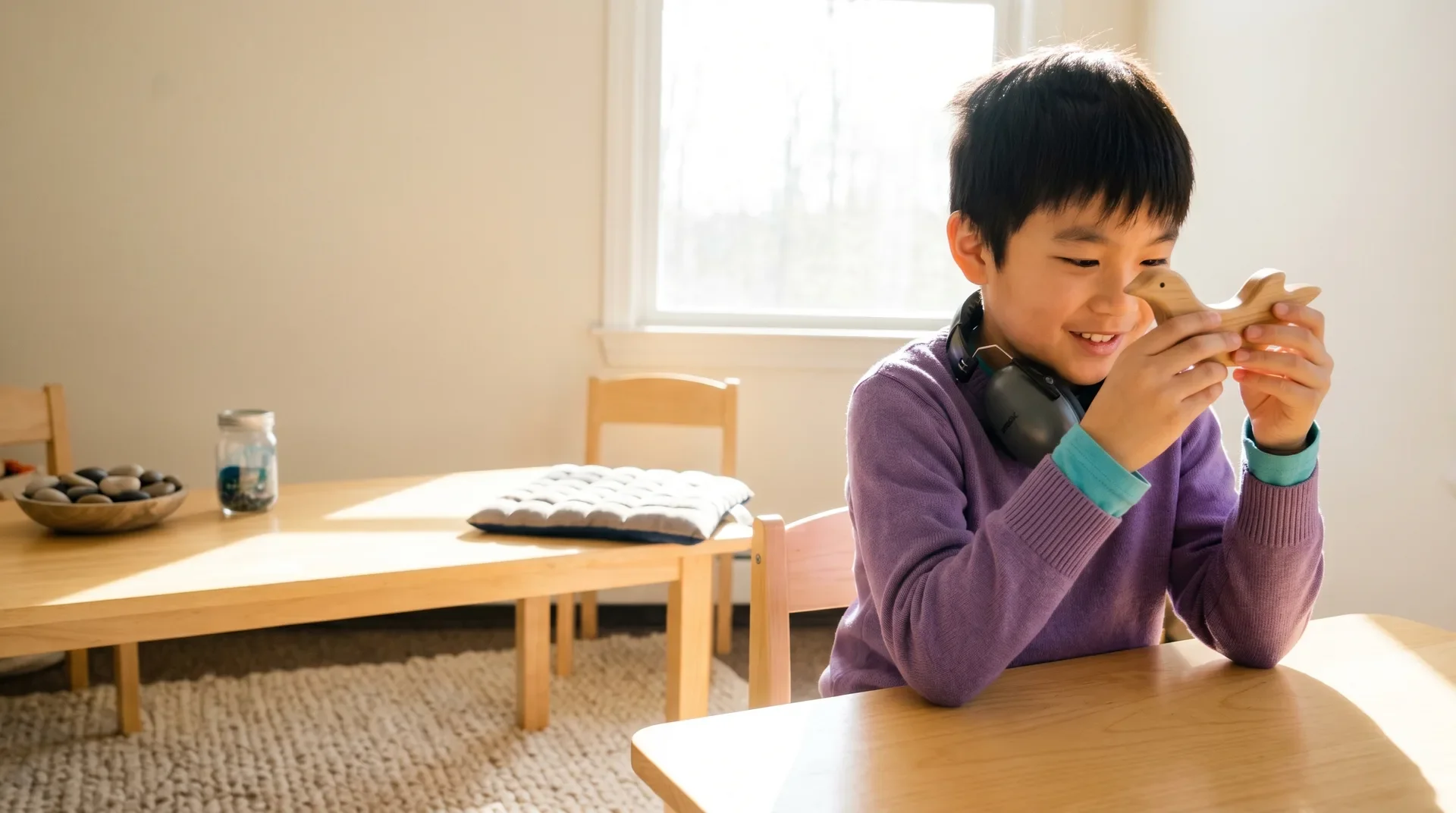
Your Child Doesn't Need to Be "Fixed", They Need to Be Understood
Neurodiversity-affirming therapy for autistic children and teens in Middletown, Delaware
Navigating a World That Wasn't Designed for Every Brain
Some children seem to experience the world more intensely than their peers.
Sounds that others barely notice feel overwhelming. Social situations that seem effortless for other kids require enormous energy. Transitions, unexpected changes, or sensory-rich environments can lead to shutdowns or meltdowns that are hard to predict and harder to manage.
Some children have strong, focused interests that bring them deep joy but make it hard to connect with peers who don't share them. Some communicate in ways that don't quite match what adults or classmates expect. Some mask their way through the school day, holding everything together in public but falling apart at home.
For families, it can feel like a constant balancing act: advocating for accommodations, managing expectations from schools and extended family, finding activities that fit, and wondering whether the right supports are in place.
These experiences are common among autistic children and neurodivergent kids more broadly. They don't point to something being wrong with your child. They point to a gap between how your child's brain works and what the world around them demands, and that gap is something therapy can help bridge.

A Different Way of Thinking About Difference
Neurodiversity is the understanding that brains naturally develop in a wide variety of ways, and that autism, ADHD, and other neurological differences are part of the normal range of human diversity, not disorders to be corrected.
Affirming therapy doesn't try to change who your child is.
It focuses on emotional well-being, skills that matter to them, and helping them build a strong, positive sense of identity.
Compliance-based approaches can cause harm.
Research increasingly shows that teaching children to suppress natural behaviors or perform social scripts can contribute to anxiety, depression, and burnout.
We take a different path.
Autistic children deserve therapy that respects who they are and helps them navigate the world without asking them to become someone they're not.
This is a foundational commitment at Resilient Kids, not a specialty add-on.
Supporting the Whole Child, Not Just the Challenges
Therapy for autistic children and teens at Resilient Kids is built around each child's individual needs, interests, and goals. There's no single protocol, because no two autistic kids are the same.
STEP ONE
Individualized From the Start
For some children, the focus is emotional regulation and sensory overwhelm. For others, it's social connection and building confidence to navigate relationships authentically.
STEP TWO
Addressing Co-Occurring Challenges
Many of the children we work with are also dealing with anxiety, depression, or the effects of being misunderstood for a long time. We help them process what they've been carrying.
STEP THREE
Strengths-Based Narrative
Therapy helps children develop a story about themselves that centers their strengths, not their struggles.
STEP FOUR
Family as Partners
We help families understand their child's neurotype, navigate schools and accommodations, and shift from a deficit lens to a strengths-based one.
Sometimes that also means helping the adults in a child's life examine their own assumptions about what "success" or "normal" should look like.
Approaches We Use
Play Therapy & Creative Modalities
Play therapy is a natural fit for autistic children, especially those who communicate and process best through action. We use toys, art, sand tray, and sensory-based activities to help children express emotions, practice social dynamics, and build coping skills in a pressure-free environment.
CBT (Adapted for Neurodivergent Learners)
When anxiety, rigid thinking, or social challenges are a focus, we use adapted CBT techniques that account for the way autistic children process information. This includes visual supports, concrete language, special interests as entry points, and a pace that respects each child's processing style.
Social Skills Support
We help children build social awareness and connection skills in ways that don't require masking. The goal isn't to teach a child to "act neurotypical" but to help them understand social dynamics, express themselves authentically, and find their people. Our social skills groups offer additional practice in a supportive, inclusive setting.
Family Systems Therapy
Neurodivergent children thrive when the whole family understands how to support them. Family systems work helps parents and siblings build communication patterns, adjust expectations, and create a home environment where every member of the family feels understood.
Equine-Assisted Psychotherapy
At Buddy's Place Therapeutic Farm, children work with horses guided by a licensed therapist. The horses' presence and sensitivity create powerful moments of trust, emotional awareness, and nonverbal communication. A dedicated format, not a combination with office sessions.
Eco-Therapy & Nature-Based Healing
Garden-based sessions at our Middletown location, with small farm animals like chickens and rabbits, offer a gentle entry point for children who'd feel overwhelmed by larger animals. Like equine work, a standalone format.
Why Families Choose Us for Neurodiversity-Affirming Care
✔ Identity-affirming philosophy.
We don't try to change who your child is. We help them thrive as exactly who they are.
✔ Bilingual support.
Services available in English and Spanish.
✔ Sensory-aware practice.
Our spaces and approaches are designed with sensory needs in mind.
✔ Experiential formats.
Two dedicated outdoor options: equine-assisted psychotherapy at Buddy's Place Therapeutic Farm, and eco-therapy in our Middletown garden.
✔ Multi-modal support.
Therapy, OT, social skills groups, and nature-based options (eco-therapy and equine-assisted psychotherapy) give families a range of dedicated formats to choose from.
✔ Caregiver education and advocacy support.
We help families navigate school systems, accommodations, and the broader world.
Questions Parents Ask About Neurodiversity-Affirming Therapy
-
It means we see autism and other neurological differences as natural variations, not deficits. In practice, that looks like therapy that respects your child's communication style, doesn't try to eliminate stimming or other regulatory behaviors, focuses on well-being rather than compliance, and supports your child in building a positive sense of identity.
-
No. Many families come to us because their child is showing signs of being neurodivergent but doesn't have a formal diagnosis. We can support your child regardless, and we can also help guide you through the evaluation process if a diagnosis would be helpful.
-
We don't conduct formal diagnostic evaluations, but we can help you understand your child's needs and refer you to trusted providers who do.
-
ABA (Applied Behavior Analysis) traditionally focuses on changing behaviors to appear more neurotypical. Our approach is different. We focus on emotional well-being, self-understanding, skill-building, and self-advocacy, without asking your child to suppress who they are. We believe therapy should help children feel good about themselves, not just "behave" in ways that make others more comfortable.
-
With your permission, we're happy to collaborate with your child's school, share relevant insights, and support advocacy for accommodations that help your child succeed in a way that works for them.
Every Brain Deserves Care That Fits
Your child doesn't need to change who they are to deserve support. They deserve therapy that sees them, respects them, and helps them build a life that feels good on their terms. We'd love to be part of that.
Servicios disponibles en español. | Sliding scale options available →