When Worry Takes Over, We Can Help
Gentle, effective anxiety therapy for children and teens in Middletown, Delaware
When Everyday Things Start Feeling Hard
Anxiety in children doesn't always look like what we expect.
It's not always a child saying "I'm scared" or "I'm worried." Sometimes it looks like a stomachache every morning before school. A meltdown over something that seems small. Repeated questions looking for reassurance. Difficulty falling asleep, or a sudden reluctance to be apart from a caregiver.
Some children become very rigid about routines or rules. Others avoid new situations entirely. Some seem fine on the outside but carry a quiet, constant tension that only surfaces at home, when they finally feel safe enough to let it out.
Anxiety can also look like anger, perfectionism, or a need to control things. It shows up differently at every age, and it can shift over time, making it tricky to recognize.
What's happening underneath is a nervous system that has gotten stuck in "alert" mode, scanning for danger even when things are safe. That's not a flaw. It's the brain doing its best to protect, just a little too aggressively. And it responds well to the right kind of support.

Anxiety Is More Common Than Most People Realize
Anxiety is one of the most common mental health experiences in childhood, and it can start earlier than many people expect. Some children are naturally more sensitive to uncertainty or change. Others develop anxiety after a difficult experience, a transition, or a period of stress. Sometimes there's no single cause at all.
Worry is real to your child.
Anxiety isn't something kids can simply "grow out of" or push through with enough encouragement. The worry is real to them, even when the situation looks manageable from the outside.
Untreated anxiety shrinks a child's world.
Over time, it can make it harder to try new things, build friendships, and feel confident in everyday life.
Anxiety is highly treatable.
Especially in children and teens. With the right support, kids can learn to understand their worry, develop tools to manage it, and start re-engaging with the things that matter.
The good news is that with the right support, anxiety doesn't get to keep running the show.
Therapy That Gives Kids the Tools to Face Their Fears
Anxiety therapy at Resilient Kids isn't about eliminating worry entirely. Some amount of worry is healthy and protective. The goal is to help your child develop a new relationship with anxiety, one where it doesn't get to make all the decisions.
STEP ONE
Understanding Anxiety
We start by helping your child understand what anxiety actually is and how it works in the brain and body. Even young children can grasp the basics when it's explained in concrete, age-appropriate ways.
STEP TWO
Building Skills
Your child learns practical strategies for calming their nervous system, challenging anxious thoughts, and managing worry in real time.
STEP THREE
Gentle Exposure
We gradually, safely help your child approach the situations they've been avoiding. Avoidance feeds anxiety. Facing fears, at the right pace, is one of the most powerful ways to shrink it.
STEP FOUR
Caregivers as Partners
We share what we're working on and offer guidance on responding to anxiety at home in ways that support progress without reinforcing the worry cycle.
Approaches We Use for Anxiety
Play Therapy
For younger children, anxiety work often happens through play. Play therapy gives kids a way to express and process their worries using toys, art, storytelling, and games. It meets children in their natural language and can be remarkably effective for kids who aren't yet able to articulate what they're feeling.
Cognitive Behavioral Therapy (CBT)
CBT is the gold standard for childhood anxiety. It helps children identify the connection between their thoughts, feelings, and behaviors, and teaches them practical skills to interrupt the anxiety cycle. A big part of CBT is gradual exposure, which means working up to feared situations in small, manageable steps with support along the way.
DBT-Informed Skills
For older children and teens, we sometimes draw from Dialectical Behavior Therapy to build distress tolerance, mindfulness, and emotional regulation skills. These tools help anxious teens manage the intensity of their feelings in real time.
Equine-Assisted Psychotherapy
At Buddy's Place Therapeutic Farm, children work with horses guided by a licensed therapist. The horses' presence and sensitivity create powerful moments of trust, emotional awareness, and nonverbal communication. A dedicated format, not a combination with office sessions.
Eco-Therapy & Nature-Based Healing
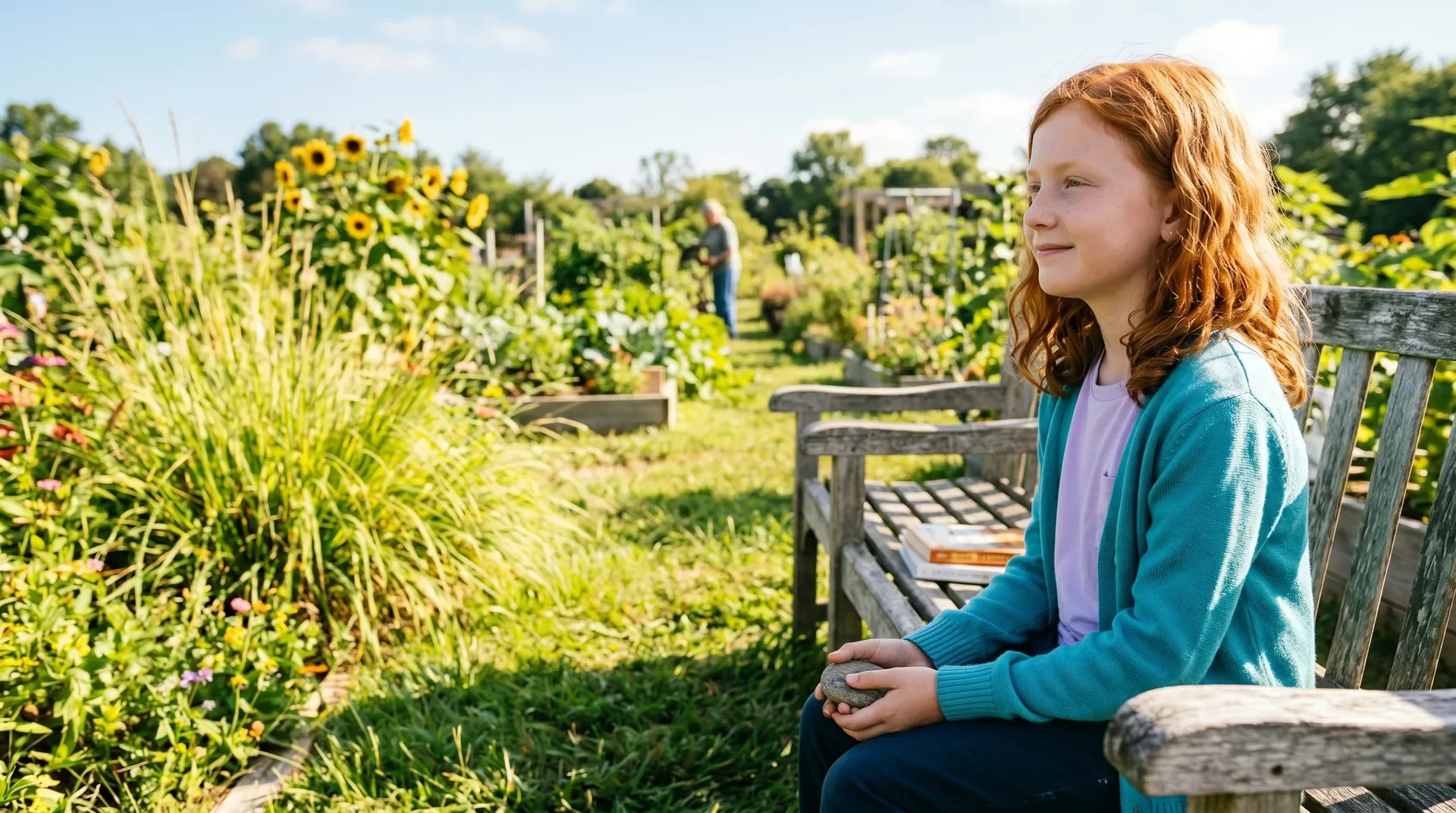
Garden-based sessions at our Middletown location, with small farm animals like chickens and rabbits, offer a gentle entry point for children who'd feel overwhelmed by larger animals. Like equine work, a standalone format.
Why Families Trust Us with Trauma
✔ Child and teen specialists.
Our therapists are trained specifically in how anxiety presents across developmental stages, from early childhood through adolescence.
✔ Experiential formats.
Two dedicated outdoor options: equine-assisted psychotherapy at Buddy's Place Therapeutic Farm, and eco-therapy in our Middletown garden.
✔ Evidence-based and creative.
We combine proven approaches like CBT with play-based, nature-based, and experiential modalities so therapy fits your child.
✔ Caregiver guidance built in.
Anxiety affects the whole family. We equip caregivers with tools and understanding so the work continues at home.
✔ Bilingual services.
Available in English and Spanish.
Questions Parents Ask About Anxiety Therapy
-
All children experience worry sometimes, and that's healthy. It may be worth exploring further when anxiety starts getting in the way of everyday life, things like school, friendships, sleep, or activities they used to enjoy. A consultation can help sort that out.
-
Gradual exposure is a core part of evidence-based anxiety treatment, but it's exactly that: gradual. We never push a child into something they're not ready for. Exposure is done in small, supported steps, and your child always has a say in the pace.
-
Many of the children we work with aren't verbal processors yet, and that's perfectly fine. Play therapy and creative approaches allow young children to work through anxiety without needing to put it all into words.
-
Yes. Many of our anxiety approaches, especially CBT and skills-based work, translate well to virtual sessions. We'll help determine whether in-person or teletherapy is the best fit.
-
It varies. Some children make significant progress in 8 to 12 sessions. Others benefit from longer-term support, especially if anxiety has been present for a while or co-occurs with other challenges. We set goals early and revisit them regularly.
-
With your permission, absolutely. We're happy to collaborate with teachers, school counselors, and other providers to make sure your child has consistent support across environments.
Worry Doesn't Have to Run the Show
Anxiety can feel all-consuming, but it doesn't have to stay that way. With the right support, your child can learn to manage worry, build confidence, and step back into the things that bring them joy.
Servicios disponibles en español. | Sliding scale options available →