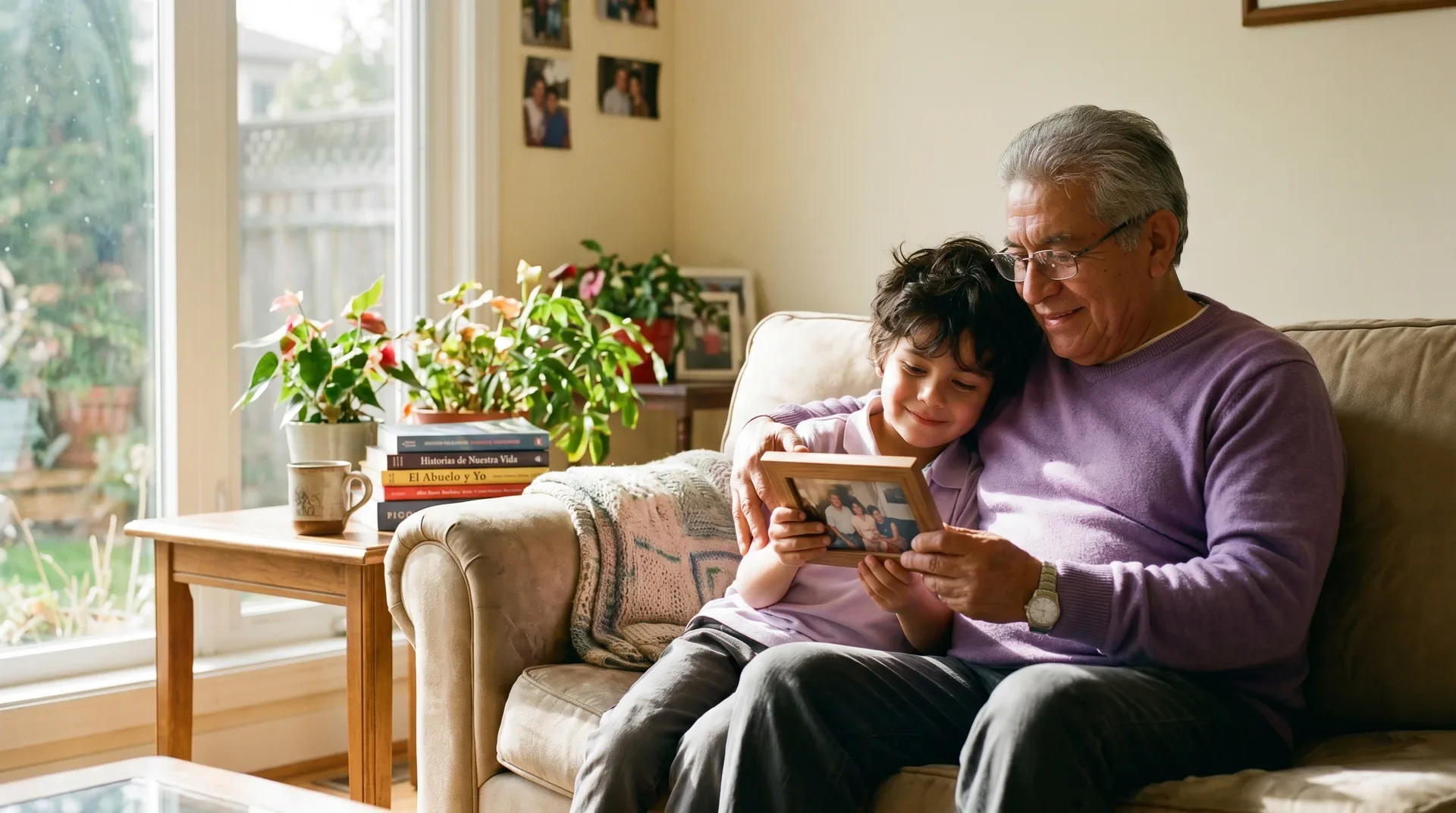
Helping Children Grieve in Their Own Way, at Their Own Pace
Compassionate grief and loss therapy for children and teens in Middletown, Delaware
Grief Doesn't Always Look Like Grief
When a child loses someone or something important, the response isn't always what adults expect.
A child might seem fine one moment and completely overwhelmed the next. They might not cry at all. They might laugh at the funeral and then have a meltdown over something unrelated a week later.
Grief in children can look like clinginess, sleep difficulties, regression to younger behaviors, sudden anger, trouble focusing at school, or a loss of interest in things they normally enjoy. Some children ask the same questions over and over as they try to make sense of what happened. Others don't seem to want to talk about it at all.
Teens may pull away, become more irritable, take on a caretaking role they're not ready for, or seem to swing between wanting to process and wanting to forget. They may also start worrying about other losses, about their own safety or the safety of the people closest to them.
All of these responses are normal. Grief in young people is not linear, and it often resurfaces at developmental milestones, birthdays, holidays, or transitions that remind them of what's missing.

Children Grieve Differently Than Adults
Children experience grief through the lens of their developmental stage, which means their understanding of loss changes as they grow. A four-year-old may not fully grasp the permanence of death. A ten-year-old may understand it intellectually but struggle with the emotional weight. A teenager may process loss more like an adult but without the life experience or coping skills to manage the intensity.
Grief isn't just about death.
Children grieve divorce, moving, loss of safety after trauma, or the end of a friendship. Any disruption to a child's sense of stability can trigger a grief response.
Kids often don't have the words.
When safety is disrupted, the nervous system can cycle through fight, flight, and freeze long after the danger has passed.
Children take cues from adults.
They may hold back their own grief if they sense it would be too much for the family to carry.
Therapy gives children a dedicated space to process loss in a way that fits their age, their personality, and their timeline.
A Safe Space to Feel, Remember, & Heal
Grief therapy for children isn't about rushing through stages or finding closure on a timeline. It's about giving your child room to process their loss in whatever way feels right for them, with someone who understands how grief works in young minds and bodies.
STEP ONE
Building Trust First
Grief work requires a deep sense of safety, and that takes time. We don't push children to talk about the loss before they're ready. We follow their lead, using play, art, storytelling, or conversation, whatever they respond to.
STEP TWO
Making Space for All of It
We help children explore their feelings, including the ones that feel confusing or "wrong" like anger, guilt, or relief. We normalize the full range of grief responses.
STEP THREE
Tools for Hard Moments
We help children develop coping skills for the waves that come unexpectedly, and for holidays, anniversaries, and the days that bring grief back to the surface.
STEP FOUR
Supporting the Family
Grief affects the whole family. We offer guidance on how to talk about loss at home, answer hard questions, and create space for grief without letting it take over.
Over time, the goal is not to "get over" the loss but to find a way to carry it that doesn't feel so heavy.
How We Support Grieving Children
Play Therapy
Play is one of the most effective ways for children to process grief. Through sand tray work, art, puppets, and imaginative play, children can express feelings they don't yet have words for. Play therapy allows children to approach their loss at their own pace and in their own language.
Trauma-Informed Grief Support
When a loss is sudden, violent, or traumatic, grief and trauma can become intertwined. In these cases, we draw from our trauma-focused approaches, including TF-CBT and EMDR, to address both the grief and the traumatic stress. Our team's deep expertise in trauma therapy means we're equipped to hold both. → Learn more about trauma therapy
Family Therapy
Grief can shift family dynamics in unexpected ways. Family therapy sessions give everyone a space to share their experience, understand each other's grief, and rebuild connection during a time that can feel isolating.
Equine-Assisted Psychotherapy
At Buddy's Place Therapeutic Farm, children work with horses guided by a licensed therapist. The horses' presence and sensitivity create powerful moments of trust, emotional awareness, and nonverbal communication. A dedicated format, not a combination with office sessions.
Eco-Therapy & Nature-Based Healing
Garden-based sessions at our Middletown location, with small farm animals like chickens and rabbits, offer a gentle entry point for children who'd feel overwhelmed by larger animals. Like equine work, a standalone format.
Why Families Choose Us for Grief Support
✔ Age-appropriate care.
Our therapists specialize in how children and teens experience grief at every developmental stage.
✔ Experiential formats.
Two dedicated outdoor options: equine-assisted psychotherapy at Buddy's Place Therapeutic Farm, and eco-therapy in our Middletown garden.
✔ Trauma-informed.
When grief and trauma overlap, our certified trauma practitioners can address both.
✔ Family-centered.
We support the whole family through loss, not just the child in the room.
✔ Creative and play-based.
For children who process better through action than words, we have a full range of expressive tools.
✔ Bilingual services.
Available in English and Spanish.
Questions Parents Ask About Grief Therapy
-
Every child grieves differently, and there's a wide range of "normal." Therapy can be helpful when grief starts affecting daily life, things like school performance, sleep, friendships, or emotional well-being, or when a child seems stuck and unable to move through their feelings over time. A consultation can help sort out whether therapy would be beneficial.
-
That's very common, and it doesn't mean they aren't processing. Our therapists use play, art, and other non-verbal modalities to help children work through grief without requiring them to talk directly about the loss until they're ready.
-
It depends on the child, the nature of the loss, and how grief is showing up in their life. Some children benefit from a focused period of support. Others may return to therapy at different milestones as their understanding of the loss evolves. We follow your child's needs.
-
Absolutely. Children grieve many kinds of loss: divorce, moving, losing a friendship, changes in family structure, and more. If the loss has disrupted your child's sense of stability or security, therapy can help them process it.
-
Yes. We offer family therapy sessions and can work with multiple family members individually as well. Grief affects the whole family, and supporting everyone often leads to the best outcomes.
Grief Deserves Gentle, Patient Support
Loss changes a family. But with the right care, children can learn to carry their grief in a way that leaves room for growth, connection, and even joy. We're here to walk alongside your family through it.
Servicios disponibles en español. | Sliding scale options available →