A Day in the Life at Buddy's Place Therapeutic Farm
Written By: Marissa Lloyd
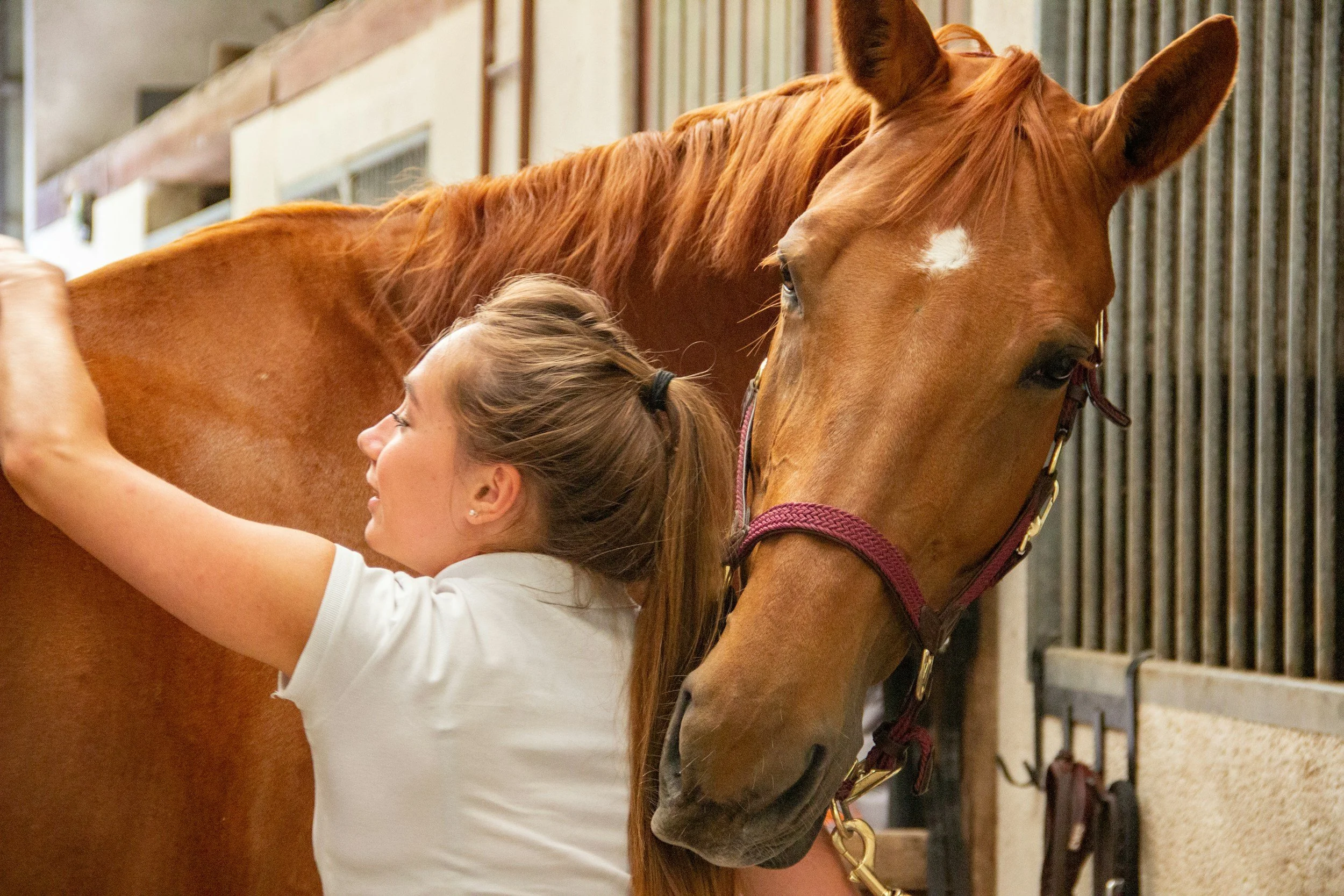
When parents hear about equine-assisted psychotherapy for the first time, the reactions tend to fall into two camps. Some light up immediately because their child loves animals, and the idea of therapy outdoors with horses sounds like a perfect fit. Others look puzzled. How does sitting near a horse help my child with anxiety? What actually happens out there?
Both reactions make sense. Equine-assisted psychotherapy is hard to picture until you see it. So instead of explaining the theory first, we want to walk you through what a day actually looks like at Buddy's Place Therapeutic Farm. Imagine you are watching from a respectful distance as a child arrives, meets the horses, and moves through a session.
Arriving at Buddy's Place Therapeutic Farm
The drive in is part of the experience. The pavement gives way to gravel, the trees open up, and the pastures come into view. For many children, the shift in scenery itself signals that something different is about to happen. The car windows come down. Conversations soften. By the time the car door opens, the city volume has dropped a few notches.
Children are usually greeted by their therapist and one of our barn team members. There is no rush. The first few minutes are spent settling in, taking in the smells of hay and earth, hearing the soft sounds of the horses moving in their paddocks. For kids who have spent the day in classrooms or in tense home environments, this transition matters. The nervous system starts to downshift before any therapy work begins.
Meeting the Horses
Horses are the heart of Buddy's Place Therapeutic Farm. Each one has a personality, a backstory, and a presence that children pick up on quickly. Some horses are gentle and steady, the kind that lean their heads toward you and stand patiently. Others are more spirited, more curious, more reactive. Part of what makes equine work so powerful is that horses cannot pretend. They respond to what is actually happening in a child's body and emotional state, not to what the child is performing on the surface.
A child who walks up to a horse with tight shoulders and held breath will often see the horse mirror that tension. As the child begins to soften, the horse softens too. This live, honest feedback teaches children something about their own emotional state in a way that words rarely can. The therapist gently helps the child notice what is happening. Not as a lecture, but as an invitation to pay attention.
What a Session Actually Looks Like
Sessions vary based on the child, the goals, and the day, but most include some combination of these elements:
Grooming a horse, which involves brushing, gentle physical contact, and slow rhythmic movement
Leading a horse on the ground, which requires the child to communicate intention and confidence
Observing the herd, watching how horses interact with each other and what that might mirror about family dynamics
Standing quietly with a horse, sometimes called co-regulation, where the child's nervous system literally syncs with the calmer animal
Reflective conversation with the therapist about what came up emotionally during the activities
There is no riding involved in our equine-assisted psychotherapy. The work happens on the ground, in relationship with the horse, with the therapist guiding the experience. This is not horseback riding lessons. It is therapy that happens to involve horses, and the difference is significant.
What Children and Teens Learn at Buddy's Place
The skills children build during equine work tend to transfer into other areas of their lives in ways that surprise families. Here are five of the most common areas where we see growth.
1. Self-Awareness in the Body
Most children do not have language for what stress, anxiety, or anger feel like in their bodies. They might know they feel "bad" or "weird," but the specifics are fuzzy. Horses bring that awareness to the surface quickly. When a child approaches a horse and the horse steps back, the child learns that something in their energy was big or unsettled. When the child slows down, takes a breath, and tries again, and the horse stays, the child experiences in real time what regulation feels like.
This kind of embodied learning sticks. Children start to recognize the same sensations later, at school, at home, in moments when no horse is around.
2. Confidence Through Connection
Many of the children we work with carry stories about themselves that are not true. Stories like "I am too much," "I am not enough," or "I cannot do hard things." When a child successfully leads a thousand pound animal across a paddock by communicating calmly and clearly, those stories start to crack. The horse is not impressed by grades, reputations, or family circumstances. The horse is responding to who the child is in this moment, and that response builds something real.
We have watched shy children become unrecognizable over the course of a season. Not because someone told them they were capable, but because they discovered it themselves with a horse as a witness.
3. Communication Without Words
So much of what happens between people happens beneath language. Tone, body posture, eye contact, energy. Children who struggle socially often miss these cues or send the wrong ones unintentionally. Horses are masters of nonverbal communication. Working with them gives children a chance to practice the subtle skills that human interactions also require, in a setting where the stakes feel manageable.
For children on the autism spectrum, children who have experienced trauma, and children with social anxiety, this kind of practice can be especially meaningful.
4. Emotional Regulation in Real Time
Regulation is not just a concept at Buddy's Place. It is something children practice with their whole bodies. Horses respond to the calmest energy in the environment, which means that when a child is dysregulated, they get immediate feedback that something needs to shift. The therapist guides the child through grounding techniques, breathing, and noticing what is happening internally. When the child finds their calm again, the horse responds, and the lesson lands.
Children take these tools home. Parents often report that their child uses language and skills picked up at the farm during difficult moments at home or school.
5. Trust That Can Be Repaired
For children who have experienced trauma or relational difficulty, trust can feel impossible. Horses offer a unique kind of relationship. They are large, powerful, and require respect, but they are also patient and forgiving in ways that humans sometimes are not. A child who has been hurt by people can practice trusting again with a horse, gradually, on their own terms. That experience, repeated over time, helps lay the groundwork for trusting people again, too.
These five areas are not separate from the rest of a child's therapy. They feed into school, family relationships, friendships, and the long process of growing up.
Who Benefits Most From Equine Work
Equine-assisted psychotherapy is not the right starting point for every child, and we are honest about that during intake. It tends to be especially powerful for children working through trauma, children with anxiety that has not responded to office-based talk therapy, children who struggle to access their emotions verbally, kids on the autism spectrum, and teens who feel resistant to traditional therapy settings.
Because we want sessions to be consistent and predictable, equine work happens at the farm, weather and horse availability permitting. Office-based sessions are a separate offering. If a child is enrolled in equine-assisted psychotherapy and the weather makes the farm unsafe, we do bring the session indoors, but in general, we keep our specialties distinct so that families know what they are signing up for and can plan accordingly.
Coming to See for Yourself
Words on a page can only do so much. Most families understand equine work the moment they see their child at the farm for the first time, watching them step into a space that feels different from anywhere else they have been. We are happy to talk through whether Buddy's Place Therapeutic Farm could be a fit for your child, and if it is, we will guide you through what to expect from the very first visit.
Reach out when you are ready, and we will take it from there.
Every family's path looks a little different, and we're here to help you find yours. Whether you're just starting to explore therapy or looking for a new fit, reach out when you're ready, and we'll take the first step together.