Small Animals, Big Feelings: How Farm Animals Help Children Heal
Written By: Marissa Lloyd
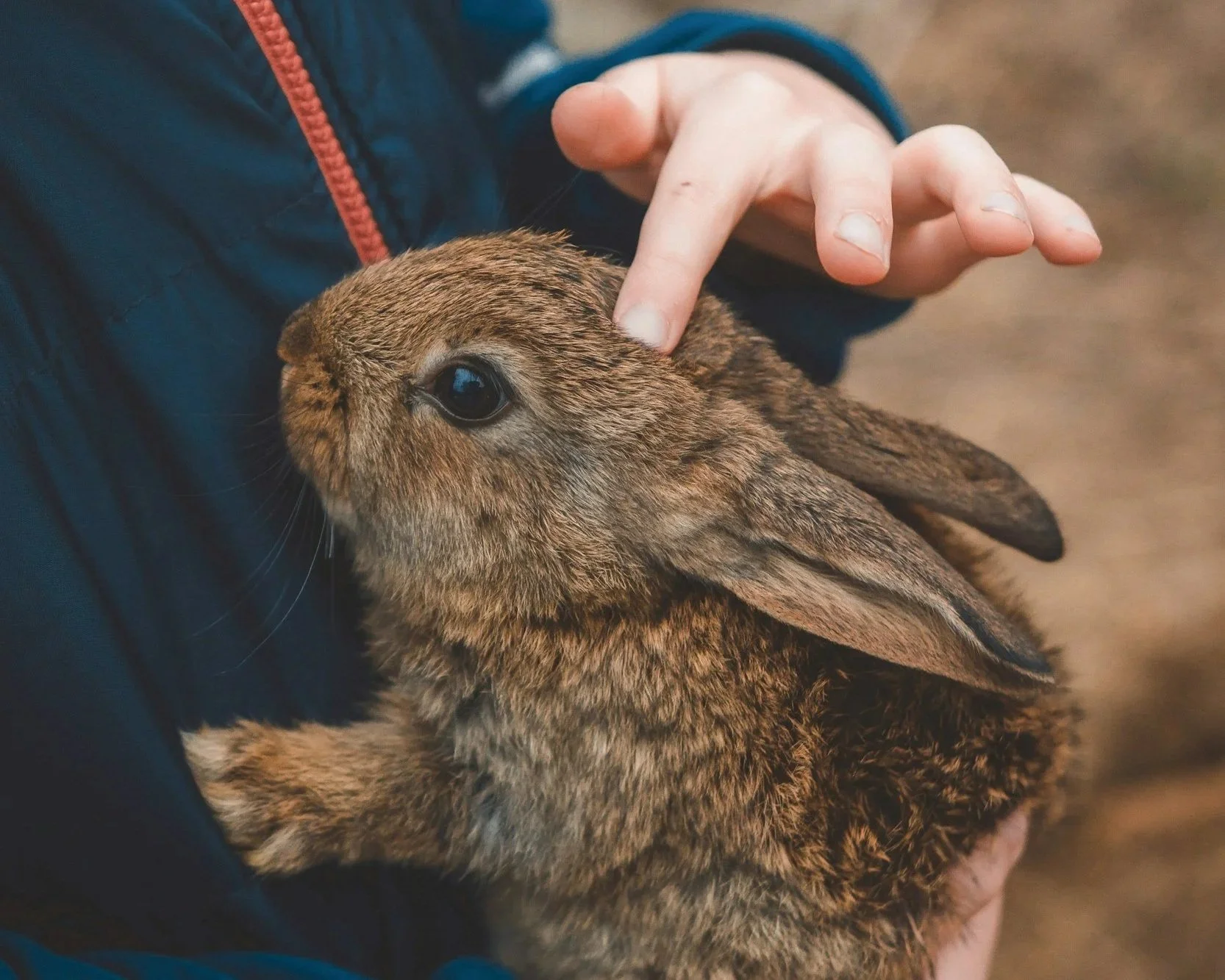
There's a particular kind of quiet that comes over a child holding a rabbit. The wiggling stops. The voice drops. Whatever they were carrying into the barn seems to set itself down for a minute. Parents notice it right away, and they're often surprised by how fast it happens, faster than any reminder to take a deep breath has ever worked.
That moment isn't an accident, and it isn't just a nice afternoon on a farm. Working with small animals is a real therapeutic approach with real goals behind it. In this guide, we'll look at why small farm animals reach kids so effectively, what a session looks like, what children learn from caring for a creature smaller than they are, and how this work fits alongside our other programs at Buddy's Place Therapeutic Farm.
Why Small Animals Are Often the Right Place to Start
Animal-assisted work has a way of bypassing the part of a child that's braced for a hard conversation. Animals don't ask questions, don't need explanations, and don't have opinions about how a child is doing at school. They simply respond to what's in front of them, which for a child who feels judged or misunderstood most of the day is an enormous relief.
Smaller animals add something else: accessibility. Horses are extraordinary partners in therapy, and for some children they're exactly right. But a horse is big, and for a child who's anxious, sensory-sensitive, or new to animals altogether, that size can be a wall before the work even starts. Chickens and rabbits are approachable in a way that lets a hesitant child say yes on the first day.
Small animals are also easier to be with rather than perform for. A child can crouch beside a hutch and say nothing for ten minutes, and nothing about that is awkward, which is rarely true when the other party in the room is an adult waiting for an answer. That permission to be quiet is often what lets a guarded child stay long enough to warm up.
There's also something quietly powerful about being the bigger, steadier one in the room. A child who feels small and out of control in most of their life gets to be the calm, careful, capable presence for a creature who genuinely needs them to be. That reversal does more for self-esteem than almost anything an adult can say.
What This Kind of Work Can Support
Small animal work is built into our eco-therapy program, and like everything else we do, activities are chosen around your child's goals rather than a set script. Some children spend weeks simply learning to be near an animal calmly. Others move quickly into caretaking, and the conversations follow from there.
Here's where we most often see it help:
Anxiety. A slow, sensory, present-moment experience that settles the body before it asks anything of the mind.
Emotional regulation. Animals respond to how a child carries themselves, giving instant, non-judgmental feedback about big energy and calm energy.
Autism and sensory needs. Predictable, gentle sensory input and connection that doesn't depend on eye contact or conversation.
ADHD. Concrete, hands-on tasks with a visible purpose, often far easier to stay with than a seated activity.
Trauma. A safe, steady relationship with a creature who asks nothing, at a pace the child sets entirely.
Self-esteem. Being trusted with the care of a living thing builds a sense of competence that praise alone can't.
Grief and loss. The rhythms of animal life offer a gentle, real-world way to hold questions about change and loss.
Social skills. Reading an animal's signals is practice in reading people's signals, without the risk of getting it wrong in front of peers. Children ready to practice with peers often go on to our social skills groups.
Children who are nervous around larger animals. A comfortable starting point for kids who want to try animal-assisted work but aren't ready for horses.
What Happens During a Session
Sessions are guided by your child's therapist and structured around their treatment plan, not by whatever the animals happen to be doing that day. Your child might help with feeding, refill water, gather eggs, brush a rabbit, sit nearby and observe, or simply learn how to move through a space so an animal stays at ease.
None of it is busywork. When a child slows their movements so a chicken doesn't startle, they're practicing self-regulation with immediate feedback. When they notice an animal is nervous, they're practicing perspective-taking. When they come back the following week and the animal remembers them, they're experiencing something many struggling kids badly need: proof that showing up consistently builds something.
Sessions flex with the season and the animals' own rhythms, which is part of what makes the work feel real to kids rather than staged. Some weeks there's a lot to do; some weeks the most useful thing available is sitting still nearby. Both count. Safety and comfort come first, always: handling is guided, hands get washed, and a child who'd rather watch from a few feet away is doing the work just as much as the child holding the rabbit.
The therapist is working the whole time, noticing what your child gravitates toward, where they hesitate, how they respond when something doesn't go as planned. Those moments become the material of the session, worked with clinically the same way anything that came up in conversation would be. No prior animal experience is needed, and no child is ever pushed to touch or hold anything before they're ready.
What Children Learn From Caring for an Animal
Some of the most durable gains we see don't come from talking about a skill. They come from practicing it with a creature who needs it. Here are five that show up again and again, and that tend to travel home with a child.
1. Regulation that's felt, not explained
You can tell a child a hundred times to lower their voice and slow their body. A rabbit teaches it in one afternoon, because the animal simply moves away when the energy is too big and settles when it isn't.
That feedback loop is immediate and completely without judgment, which is why it lands. Over time, children begin to notice their own state before the animal does, the beginning of real self-regulation.
2. Patience with things that take time
Animals warm up on their own schedule. A child who wants a chicken to come closer learns that pushing harder makes it worse and that waiting quietly works, which is a lesson that generalizes to friendships, schoolwork, and hard feelings.
For kids who live in the world of instant everything, discovering that patience actually produces results is genuinely new information.
3. Responsibility that feels good instead of heavy
Chores at home can feel like a demand. Caring for an animal feels like being trusted. The task is the same shape, but the meaning is different, and children who resist responsibility at home often step into it eagerly at the farm.
Parents frequently tell us this is the first thing they notice carrying over: a child who suddenly wants to be counted on.
4. Reading signals without words
An animal's body language is honest and constant: ears, posture, distance, stillness. Learning to read it is low-stakes practice for reading people, and it's especially useful for children who find social cues confusing or exhausting.
Because the animal never gets offended or gossips about a misread, kids can practice without the social risk that makes school so draining.
5. Confidence built on something real
Confidence rarely comes from being told you're capable. It comes from doing something that mattered and knowing you did it. A child who fed, calmed, or cared for an animal has evidence, and evidence is much harder to argue with than encouragement.
Together, these are the same skills we work toward in any therapy room. The farm just offers a different, and for some children a much more willing, way in.
How Small Animal Work Fits With Our Other Programs
At Buddy's Place Therapeutic Farm, small animal work lives within our eco-therapy program, alongside gardening and nature-based sessions. Our equine-assisted psychotherapy is its own distinct program, built around the horse-human relationship and structured differently, and our group therapy programs run separately again.
Families choose one track at the start, either outdoor sessions at the farm or office-based sessions in Middletown, and stay with it, rather than alternating week to week. We learned this the practical way: mixing settings made scheduling and therapist availability unpredictable, and consistency is worth protecting for your child. If the weather turns on a scheduled outdoor session, we'll move that week indoors so nobody loses their appointment. Wherever the session happens, it's held to the same clinical standards, with the same goals you set together and revisit as your child grows.
We're Here When You're Ready
For some children, the door into therapy isn't a conversation at all. It's a bucket of feed, a warm animal, and an adult nearby who notices what happens in the quiet. If your child lights up around animals, or has been curious but not quite brave enough yet, this may be a gentle place to begin.
We'd love to answer your questions and help you figure out whether this is the right fit for your family. Our Client Care Coordinator will take time to learn about your child and match you with a therapist who suits them. There's no pressure and no commitment. Reach out whenever you're ready, and we'll take it from there.
Every family's path looks a little different, and we're here to help you find yours. Whether you're just starting to explore therapy or looking for a new fit, reach out when you're ready, and we'll take the first step together.