Postpartum Doesn't End at Six Weeks
Written By: Marissa Lloyd
You went to the six-week appointment. The provider asked how you were doing. You said you were fine, mostly because there was a baby on your lap and a clock on the wall and no real way to explain that you have not felt like yourself in almost two months. They told you that you were cleared. Cleared for what, exactly, you were not sure. You smiled, took the paperwork, and went home to a life that did not feel cleared at all.
Maternal Mental Health Awareness Month is a chance to say what so many mothers have been quietly waiting to hear. Postpartum does not end at six weeks. For many of us, it has barely begun.
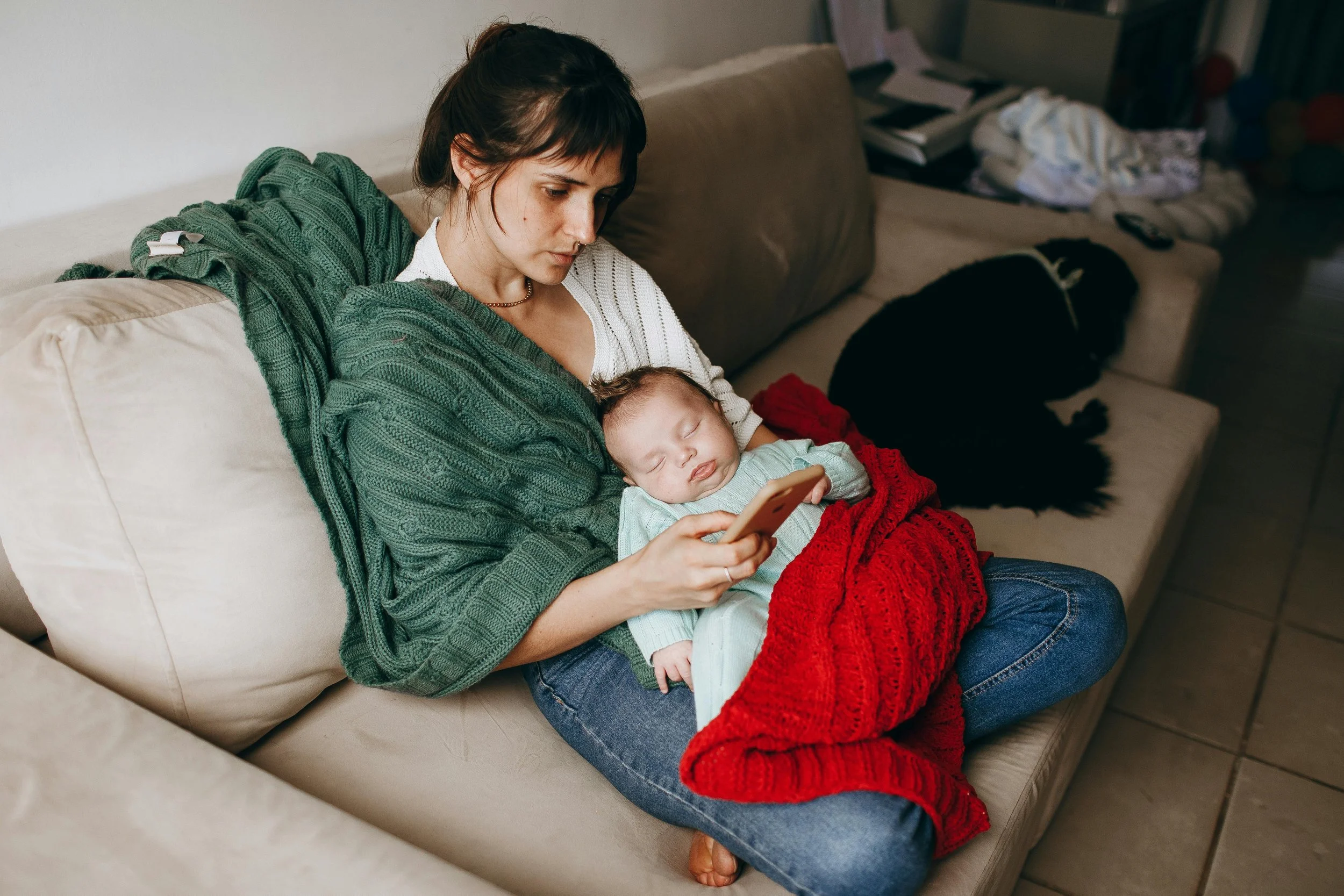
The Six-Week Myth
Somewhere along the way, our culture decided that six weeks was the standard timeline for postpartum recovery. Six weeks for the body to heal. Six weeks before going back to work. Six weeks before being expected to return to your old self. The reality of motherhood has very little to do with that timeline.
Your body does not finish recovering in six weeks. Your hormones do not stabilize in six weeks. Your sleep is rarely caught up in six weeks. Your nervous system has just gone through one of the most significant transitions of your entire life, and six weeks is, frankly, a beginning. The science increasingly recognizes a "fourth trimester" lasting at least the first three months, and many experts now talk about the postpartum period as lasting closer to two full years.
So if you are six weeks out, six months out, eighteen months out, and you still feel like something has shifted that you cannot quite name, you are not behind. You are right on time for an experience that no one prepared you for.
What Postpartum Mental Health Actually Looks Like
Postpartum mental health is not just postpartum depression. That is the part most people have heard of, but it is one piece of a much larger picture. New mothers can experience a wide range of mental and emotional shifts long after the standard timeline ends, including:
Postpartum depression that creeps in gradually rather than all at once
Postpartum anxiety that shows up as racing thoughts, intrusive worries, or constant checking
Postpartum rage that surprises you with its intensity
A persistent sense of disconnection from yourself, your body, or your baby
Grief for the version of yourself you were before
Identity shifts that feel destabilizing, even when you wanted this baby
A return of old struggles like trauma, eating concerns, or perfectionism
A creeping numbness that feels worse than sadness
None of this means something is wrong with you. It means motherhood has rearranged you, and the rearranging deserves real care.
Why Mothers Are Often Last in Line
There is a quiet pattern in many homes. The baby is cared for first. The partner gets attention next. The other kids, if there are any, take their share. The mother takes whatever is left, which is often nothing. She tells herself she will get to her own care later. Later keeps not arriving.
This is not a personal failing. It is a cultural one. Mothers are praised for sacrificing themselves and questioned when they do not. The systems around new mothers are not designed to catch them. The expectation is that they will catch themselves.
But you cannot keep catching everyone if no one is catching you. Mothers who are quietly struggling for months or years are not weaker than anyone else. They are responding accurately to a season that asks more than any human being can give without support.
Signs It Might Be Time to Reach Out
If you are wondering whether what you are experiencing is "enough" to warrant support, here is a more honest measure. These are not diagnoses. They are signals.
1. You Have Stopped Feeling Like Yourself, and It Has Not Come Back
If the version of you that you used to recognize has been gone for weeks or months, that is worth listening to. Identity shifts are normal in motherhood. Identity loss is something different, and it tends to lift more easily with support than without.
2. The Worry Is Running You Instead of the Other Way Around
A certain level of worry comes with a new baby. But if your thoughts feel intrusive, if you cannot put the baby down without spiraling, if you keep checking on them in ways that feel compulsive, your nervous system is asking for help. Postpartum anxiety is very treatable, and you do not have to white-knuckle through it.
3. You Cry, Snap, or Numb Out in Ways That Feel Outsized
Big feelings are part of motherhood. But if they are showing up in ways that feel out of proportion to what is happening, or if you find yourself disappearing emotionally in order to cope, that pattern deserves a closer look. These are not character flaws. They are signs of a system carrying more than it can hold alone.
4. The Bond Feels Different Than You Expected
The cultural story is that mothers fall instantly in love with their babies. The actual experience is far more varied. Some mothers feel a deep connection right away. Others feel guilt because the connection is taking longer than expected, especially after a hard birth, NICU stay, or complicated pregnancy. A slower bond is not a broken bond. With support, it almost always strengthens.
5. You Have Thought About Reaching Out More Than Once
If the idea of talking to someone keeps showing up, that is information. The thought is not random. It is your inner self letting you know that something needs care. You do not have to wait until things feel desperate. The thought itself is enough of a reason.
These are not the only signs. They are simply common ones. Trust what you notice in yourself.
What Support Can Look Like
Support for postpartum mental health does not have to mean a long course of treatment. It can mean a few sessions with someone trained in maternal mental health to help you make sense of what you are carrying. It can mean ongoing therapy that walks with you through the longer arc of motherhood. It can mean teletherapy from your couch while the baby naps, which is often the most realistic option in this season of life.
For mothers who feel overwhelmed by the bigger family system, family therapy can also help shift dynamics that are weighing on you, including how parenting tasks are shared, how you and your partner are communicating, and how older children are adjusting to a new sibling.
If you are not sure what you need yet, that is okay. You do not have to know. You just have to start the conversation.
A Note for Partners and Loved Ones
If you love someone who is in the postpartum season, please do not assume she is fine because she says she is. Ask twice. Notice the small things. Take something off her plate without being asked. Tell her she does not have to be okay yet. Help her find support if she is open to it. Your steady presence is one of the most protective forces in her recovery.
A Final Thought
You are not late. You are not broken. You are inside a transformation that very few people are honest about, and you deserve more than a six-week clearance. If something inside you has been quietly asking for care, this is your sign that the asking is enough. We are honored to walk with mothers through this season, and we would love to walk with you. Reach out whenever you are ready. You are not alone in this.
Every family's path looks a little different, and we're here to help you find yours. Whether you're just starting to explore therapy or looking for a new fit, reach out when you're ready, and we'll take the first step together.