How Gardening and Art-Based Therapy Help Children Grow
Written By: Marissa Lloyd
Some kids settle the moment they step outside. The fidgeting eases, the shoulders come down, and the words that wouldn't come indoors start finding their way out. If that sounds like your child, there's a kind of therapy built around exactly that shift, one that brings together creativity, counseling, and the steadying pull of the natural world.
Below, we'll walk through what nature-based art therapy and gardening therapy actually are, why being outside changes how a child opens up, what happens in a session at our farm, and a few simple ways to bring a little of it home. There's no pressure here, just information, so you can decide what feels right for your family.
What Gardening and Nature-Based Art Therapy Are
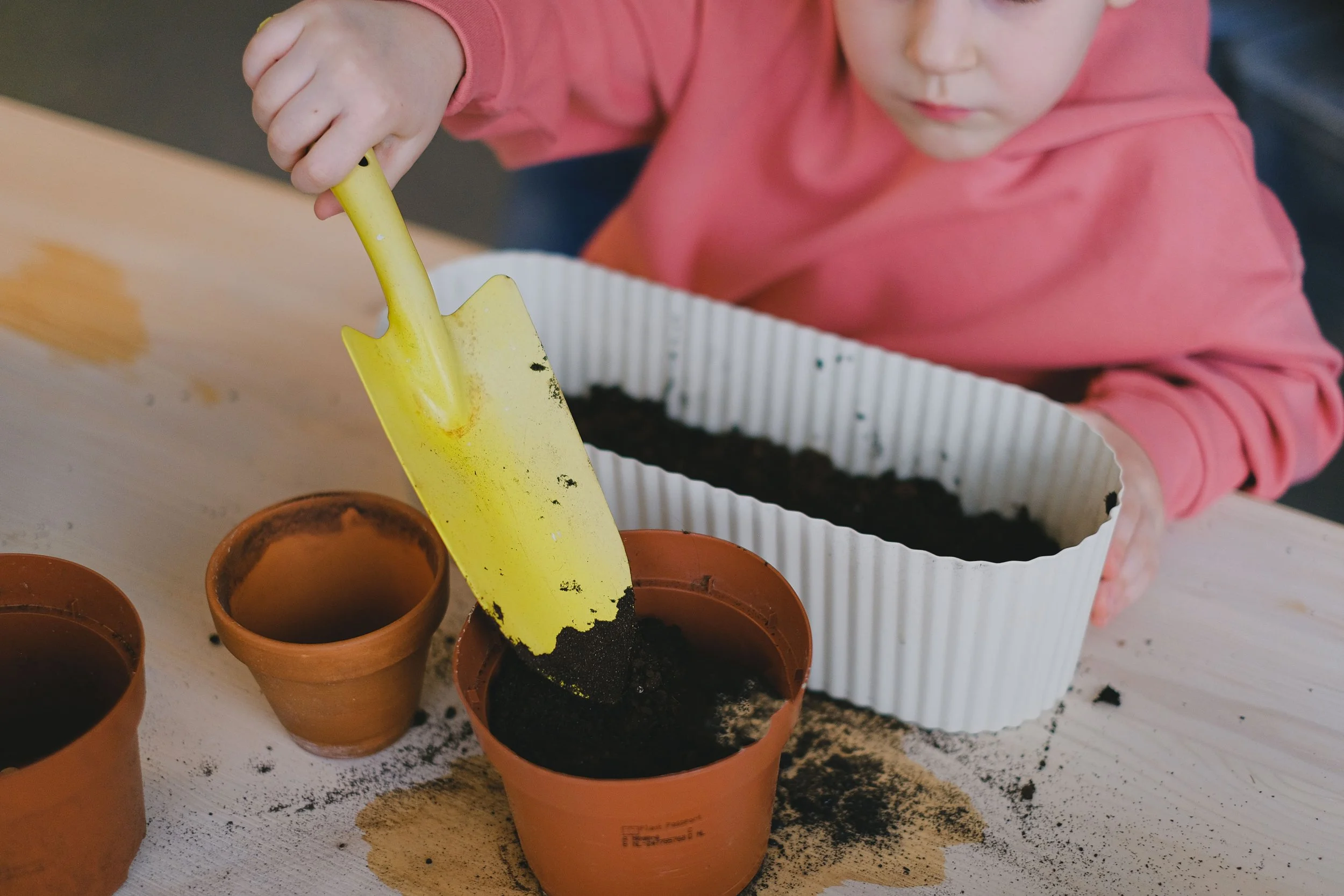
Nature-based art therapy is counseling that combines creative work with time spent outdoors and with natural materials. A child might plant and tend something in a garden, make art from leaves and stones, or work with clay and soil, all guided by a trained therapist with a clear therapeutic goal in mind.
It sits alongside a few related approaches you may have heard of, like eco-therapy (therapy that uses nature and the outdoors) and horticultural therapy, sometimes called gardening therapy, which centers on growing and tending plants. What ties them together is simple: the natural world becomes part of the healing, not just the backdrop.
At Resilient Kids, much of this work lives inside our eco-therapy program and happens at our farm, Buddy's Place Therapeutic Farm, where the gardens and open space give kids room to move, make, and breathe. It's a working, living place, which is exactly what makes it useful.
Why Being Outside Changes How a Child Opens Up
There's a reason a walk outside can reset your own mood. Time in nature has a settling effect on the nervous system. It lowers stress, softens anxiety, and helps a busy mind slow down. For kids who feel wound up, overstimulated, or cooped up indoors, that shift can be powerful before a single word is spoken.
Being outdoors also invites movement and hands-on discovery, which is how a lot of children process the world best. Digging, planting, building, and exploring give restless energy somewhere to go. And the sensory richness of nature (the textures, the smells, the sounds) can be grounding for kids who feel scattered or overwhelmed.
The setup itself matters, too. In a traditional office, a child sits across from an adult and is often asked to talk, which for many kids feels like a spotlight. Outside, you're working side by side instead of face to face. There's no clock-watching in a quiet room, no sense of being studied. And the setting quietly does some of the teaching on its own: when a child plants a seed and watches it grow, or tends something that struggled and came back, the garden mirrors their own life. Patience, care, setbacks, and growth become things they can see and touch, not just talk about.
Who This Kind of Therapy Tends to Help
Your child doesn't need a green thumb, an artistic streak, or a love of getting muddy. There's no right way to do any of it, and sessions move at your child's pace. What matters more is whether the outdoors is a place where your child already feels a little more like themselves.
These are the areas where we most often see gardening and nature-based creative work make a difference:
Anxiety. A calm, sensory way for worried kids to slow down and settle their bodies.
ADHD. Kids who focus better when they can move often thrive with hands-on, outdoor work.
Autism and sensory needs. Rich but manageable sensory input, and a low-pressure way to explore feelings without relying on words. If sensory needs are a bigger part of your child's picture, our occupational therapy team is another place families often ask about.
Emotional regulation. Digging, planting, and working with natural materials give big feelings a safe outlet.
Stress and burnout. For kids buried under school and schedules, time outside is a real release valve.
Self-esteem. Growing something, or making something from what they've gathered, gives a child a genuine sense of I did that.
Grief and loss. The cycles of a garden (growth, rest, renewal) gently help a child hold big feelings about change.
Trauma. The steadiness of the outdoors helps a child feel grounded while working through hard experiences at their own pace.
Kids who feel cooped up. For children who come alive outdoors, this simply meets them where they already are.
What a Session at Buddy's Place Looks Like
Every session looks a little different, and it flexes with the season. In general, your child might plant or tend something in the garden, create art from natural materials, work with soil or clay, or spend quiet, mindful time noticing what's around them. There's no worksheet and no lecture. Mostly, there's doing.
Here's the important part: this isn't outdoor playtime, and it isn't a break from the real work. Every activity is chosen on purpose, with a goal behind it. A therapist knows which tasks tend to calm an anxious child, which help a restless child focus, and which invite a guarded child to open up. The nature and the making are the doorway. The therapeutic work happens while your child is digging, planting, or creating, and gets worked with clinically just as it would if it had come up in conversation.
A few examples of how a simple activity does real work:
Planting and tending a seed. Caring for something living builds patience, responsibility, and hope, and watching it grow gives a child a hands-on mirror for their own progress.
Nature art and land art. Arranging leaves, stones, and petals into patterns is calming and focusing. It's a gentle practice in mindfulness, and in letting go, since the art isn't meant to last.
Soil and mud work. Digging and working the earth is deeply grounding. For a child who tends to melt down or lash out, it's a safe way to move frustration through the body.
Nature collage and storytelling. Gathering natural pieces to build an image gives a child a way to tell their story when words are hard to find.
This work is led by Johanna Murphy, ATR-P, who works with children, tweens, teens, and young adults from age 2 up and brings particular depth with neurodivergent, highly sensitive, and LGBTQ+ kids. Her approach is built around each child rather than around a method, and for kids who do their best thinking outside, the garden is often where that starts. You can read more about her and the rest of our team any time.
Choosing an Outdoor Track or an Office Track
One thing we've learned from families: predictability matters. So when you start with us, you and your therapist choose one setting, either outdoor sessions at Buddy's Place or office-based sessions in Middletown, rather than alternating between them week to week. Families who tried mixing found it made scheduling and therapist availability unpredictable, and the consistency your child needs is worth protecting.
If your child is in the outdoor track and the weather turns, we'll move that session indoors so nobody loses their week. Otherwise, the setting stays steady, and either way, the therapeutic work is the same work, held to the same clinical standards.
Four Ways to Bring a Little of It Home
You don't need a farm, a garden bed, or any particular skill to extend some of this between sessions. A few small habits go a long way.
1. Give your child something living to tend
A single pot on a windowsill counts. Caring for something that visibly responds to attention (water, light, patience) gives a child a low-stakes, daily experience of my care makes a difference, which is a quiet antidote to "I'm bad at everything."
Let it be genuinely theirs, including the imperfect parts. A plant that struggles and recovers teaches something a thriving one can't.
2. Take the hard conversations outside
If there's something you need to talk through with your child, try doing it on a walk or while you're both weeding, raking, or filling a bird feeder. Side by side takes the intensity down, and hands that are busy make hard words easier to find.
You may notice your child says more in twenty minutes of shared work than in a direct conversation at the kitchen table.
3. Collect instead of buying
A walk with a bag or a bucket turns an ordinary afternoon into something a child can build with later: leaves, acorns, stones, seed pods. The gathering is calming on its own, and the pile becomes material for making at home.
4. Let the seasons be part of the conversation
Noticing what's blooming, what's gone dormant, and what's coming back gives families a natural, gentle vocabulary for change. Kids working through grief, transitions, or the ordinary ups and downs of growing up often find it easier to talk about their own seasons this way.
Small as these are, they carry the same message the work carries: growth takes time, and you're not doing it alone.
We'd Love to Talk About What Fits Your Child
Some children open up best when they're outside, with room to move and something growing in their hands. Others do their best work in a quiet room with good materials and a therapist who knows how to use them. Neither is better. What matters is the fit, and the goals you set together.
If you're wondering whether gardening and nature-based art therapy might be right for your child, we'd love to answer your questions, and you're always welcome to schedule a free consultation. Our Client Care Coordinator will learn about your family and help match you with the right therapist. There's no pressure and no commitment, just a conversation, whenever you're ready.
Every family's path looks a little different, and we're here to help you find yours. Whether you're just starting to explore therapy or looking for a new fit, reach out when you're ready, and we'll take the first step together.